
Bild: FAU FabLab | CC BY-SA 3.0
Wir haben drei FDM-Drucker von Bambu Lab (2x X1 Carbon und 1x P1S, jeweils mit AMS) sowie einen SLA-Drucker (UniFormation GK2). Mit dem AMS druckst du bis zu vier Farben oder Materialien in einem Druck. Wie 3D Drucker funktionieren, ist hier kurz erklärt.
Wenn du eine Idee hast, aber nicht weiter weißt, komm doch einfach in eines unserer OpenLabs. Dasselbe gilt, wenn du noch keine Idee hast, aber trotzdem etwas 3D drucken möchtest. Die Website Printables.com oder Thingiverse.com hat immer etwas für dich. Lies dir am besten vorher die Einweisung für den passenden Drucker durch:
Einweisung FDM Drucker (Bambu Lab X1 Carbon und P1S)
Einweisung SLA Drucker (UniFormation GK2)
Was bei uns möglich ist:
- Prototypen und Ersatzteile: Halter, Clips, Gehäuse, Zahnräder oder das eine fehlende Teil, das es nirgends zu kaufen gibt.
- Mehrfarbig und mehrere Materialien: Logos, Schilder, Figuren und Deko dank AMS.
- Bis 256 × 256 × 256 mm: Genug Platz für Gehäuse, Vorrichtungen und größere Modelle.
- PLA, PETG und ASA: PLA für fast alles, PETG für zähe Funktionsteile, ASA für Teile, die draußen Sonne und Wetter aushalten müssen.
- Dein Projekt: Ob Semesterprojekt, Hobby oder reine Neugier: Komm in ein OpenLab, wir helfen dir beim Einstieg.
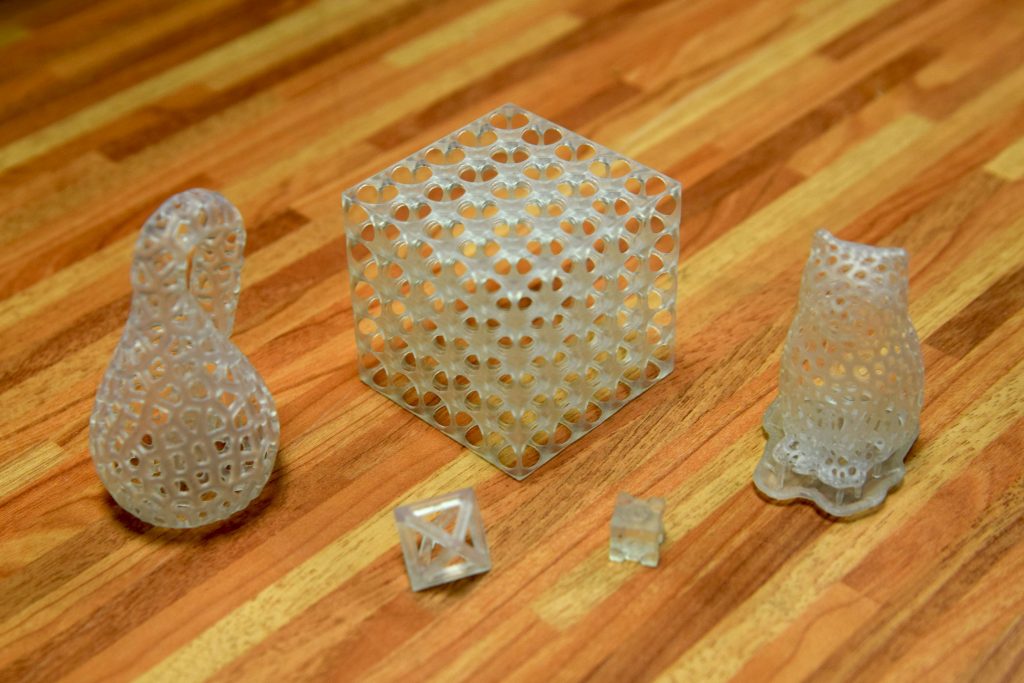
FDM oder SLA? Beim FDM-Druck wird Kunststoff geschmolzen und abgelegt. Beim SLA-Druck wird flüssiges, wasserwaschbares Harz verwendet und auf jeder Ebene wird eine Materialschicht „belichtet“. SLA-Druck ist etwas teurer, liefert aber sehr feine Details und glatte Oberflächen.
Hinweis: Die Einweisung gibt es bisher nur auf Deutsch, eine englische Version folgt. / The briefing is currently only available in German, an English version will follow.
—————- English version –————––
We have three FDM printers from Bambu Lab (2x X1 Carbon and 1x P1S, each with AMS) and one SLA printer (UniFormation GK2). With the AMS you can print up to four colors or materials in a single print. How 3D printers work is briefly explained here.
If you have an idea but don’t know how to realise it, just come to one of our OpenLabs. The same goes if you don’t have an idea yet but still want to 3D print something. Printables.com and Thingiverse.com always have something for you. It is best to read the briefing for the right printer first:
Briefing FDM Printers (in German) (Bambu Lab X1 Carbon and P1S)
(an English version will follow)
Briefing SLA Printer (in German) (UniFormation GK2)
(an English version will follow)
FDM or SLA? FDM printing melts and deposits plastic. SLA printing uses liquid, water-washable resin that is cured („exposed“) layer by layer. SLA printing is somewhat more expensive, but delivers very fine details and smooth surfaces.
What is possible here:
- Prototypes and spare parts: holders, clips, housings, gears, or that one missing part you cannot buy anywhere.
- Multicolor and multiple materials: logos, signs, figures and decorations thanks to the AMS.
- Up to 256 × 256 × 256 mm: plenty of room for housings, fixtures and larger models.
- PLA, PETG and ASA: PLA for almost everything, PETG for tough functional parts, ASA for parts that have to withstand sun and weather outdoors.
- Your project: semester project, hobby or pure curiosity: come to an OpenLab and we will help you get started.